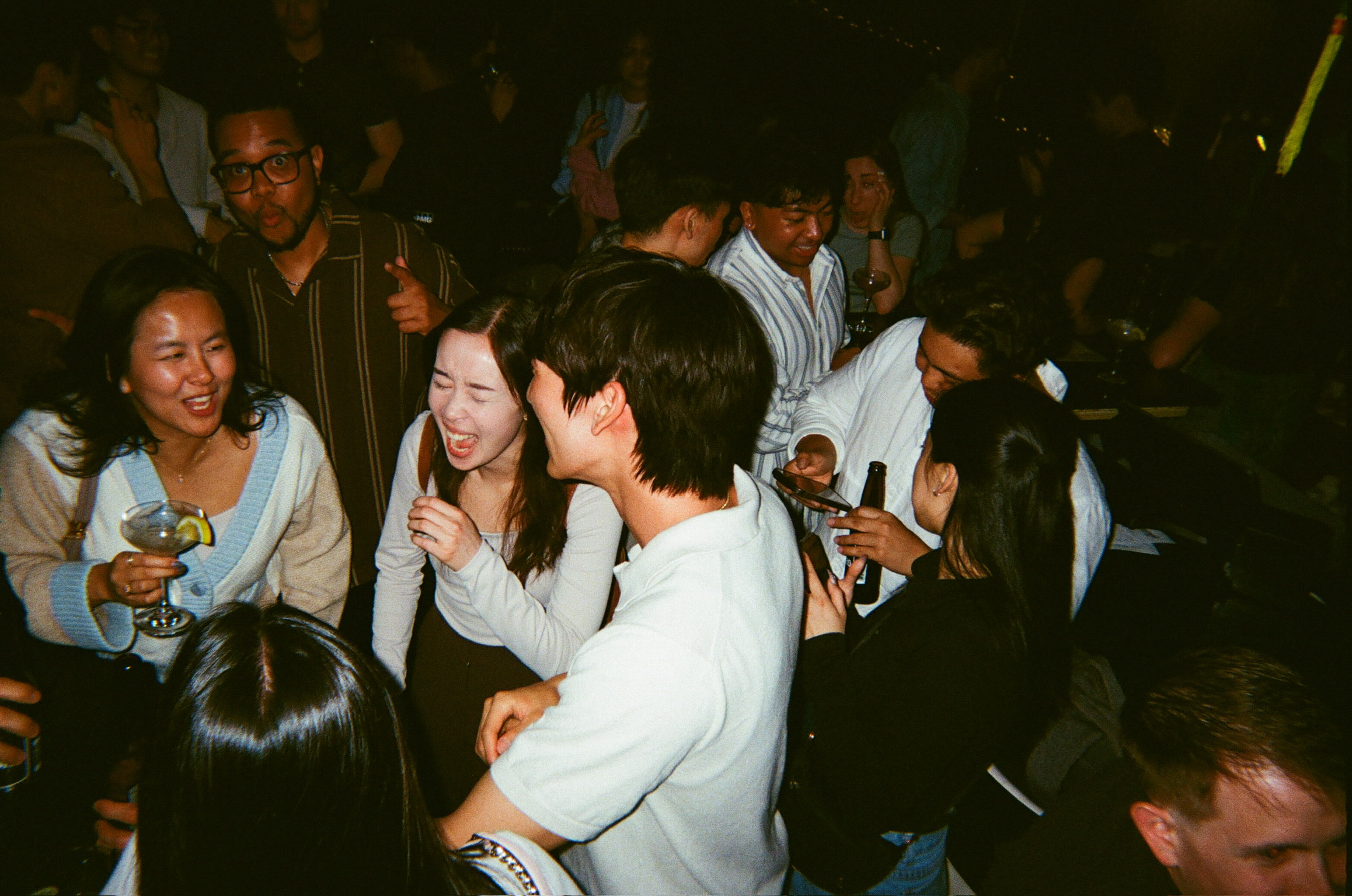
3RD SPACE SOCIAL - INTERN
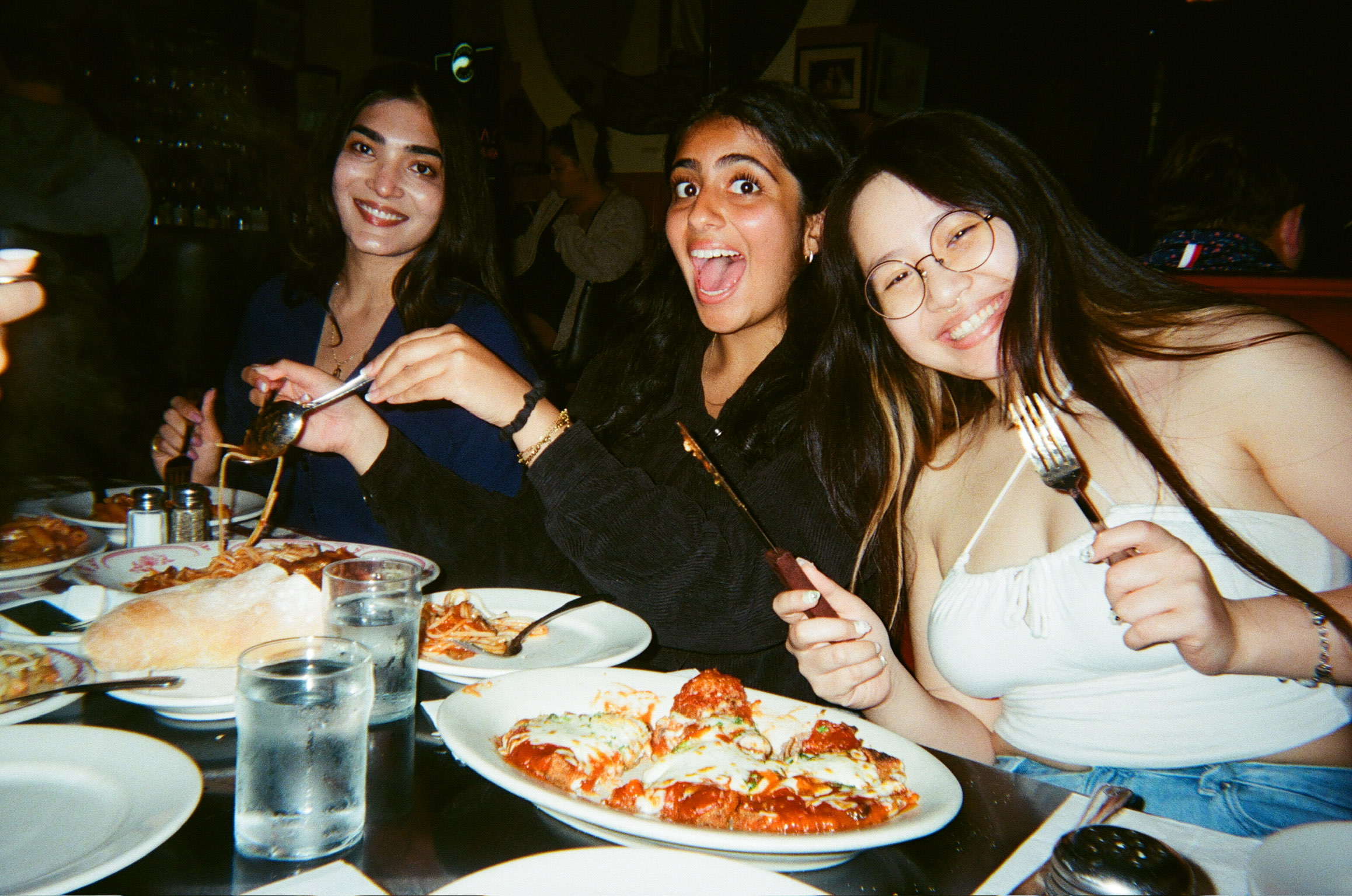
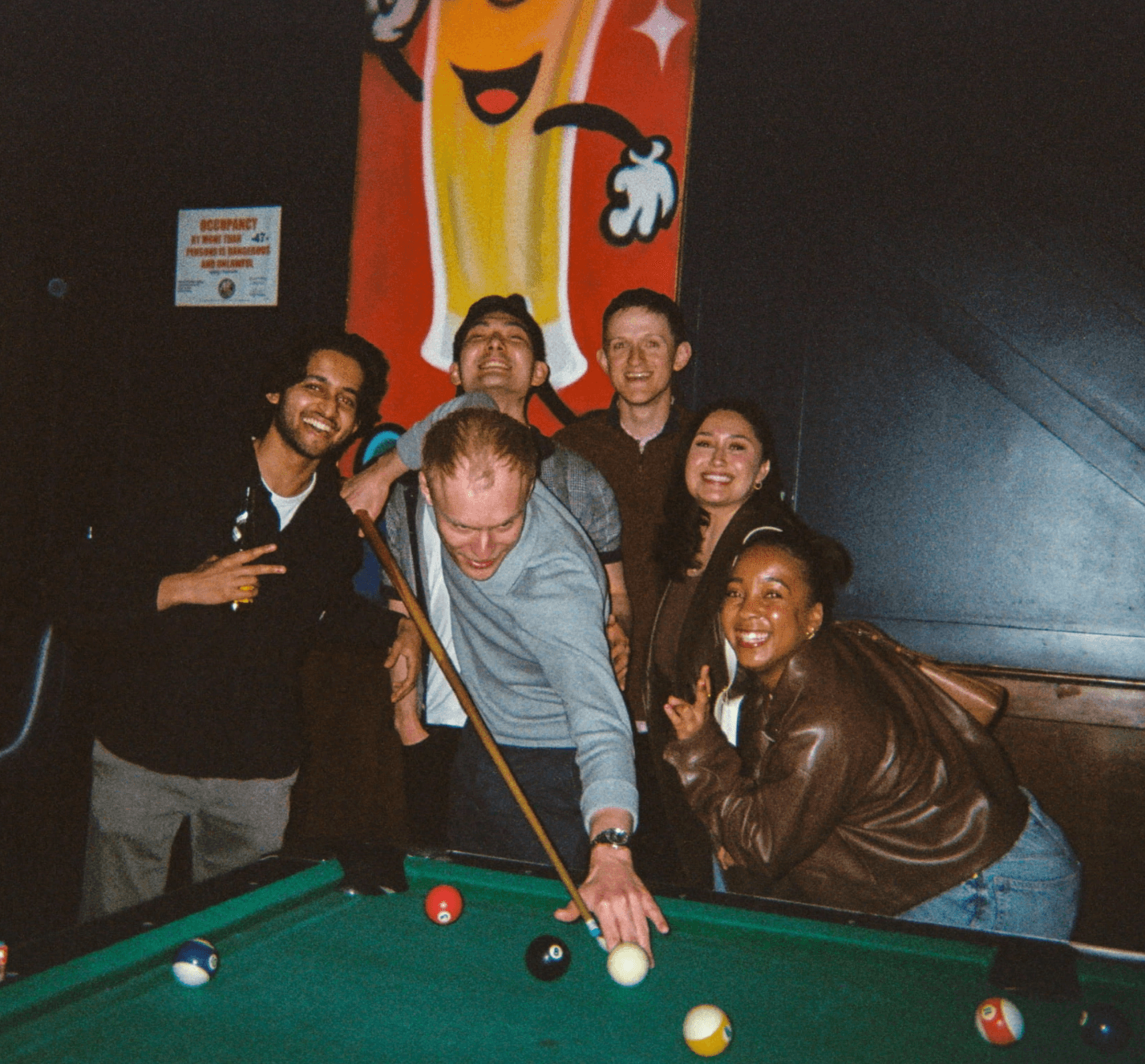
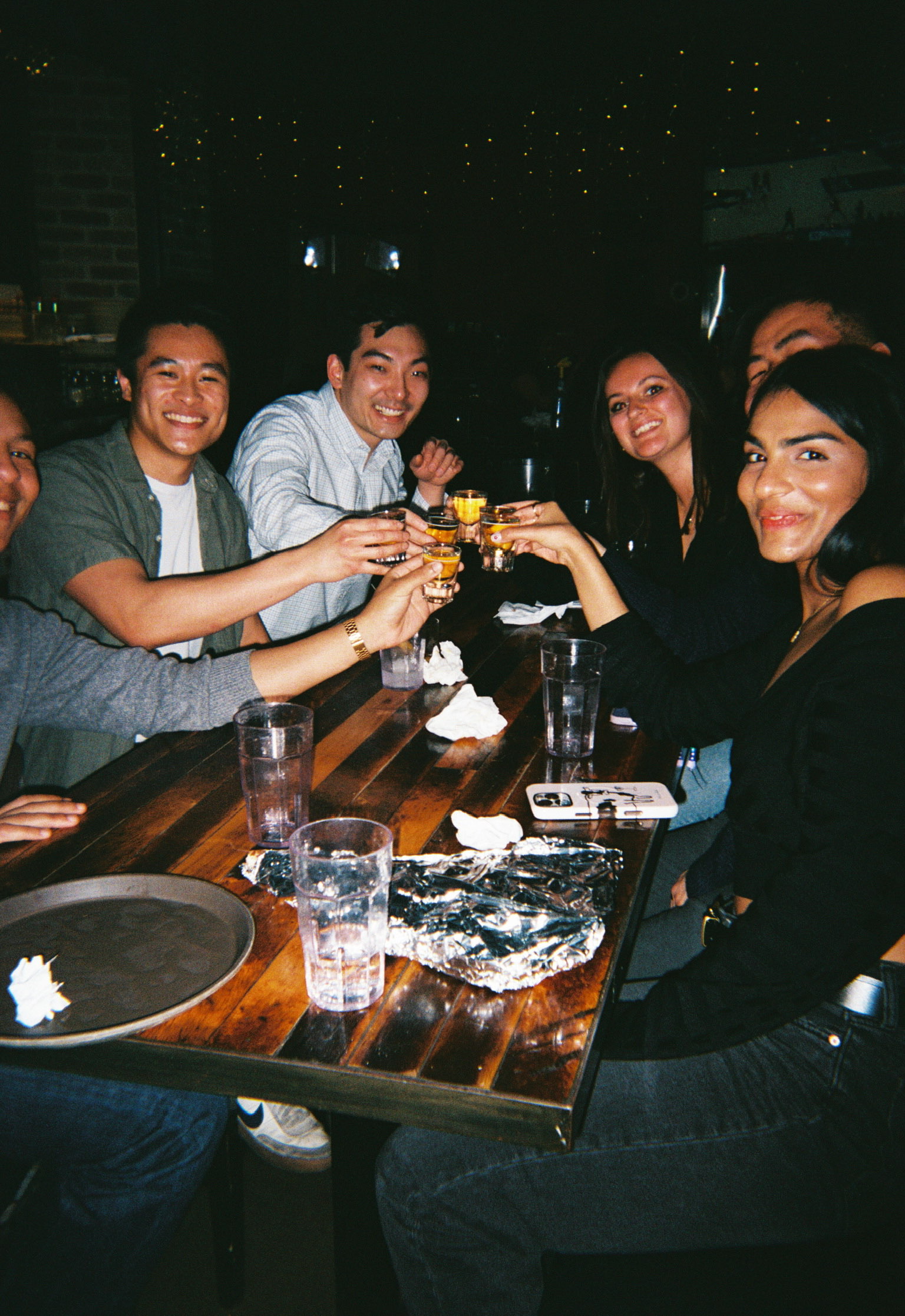
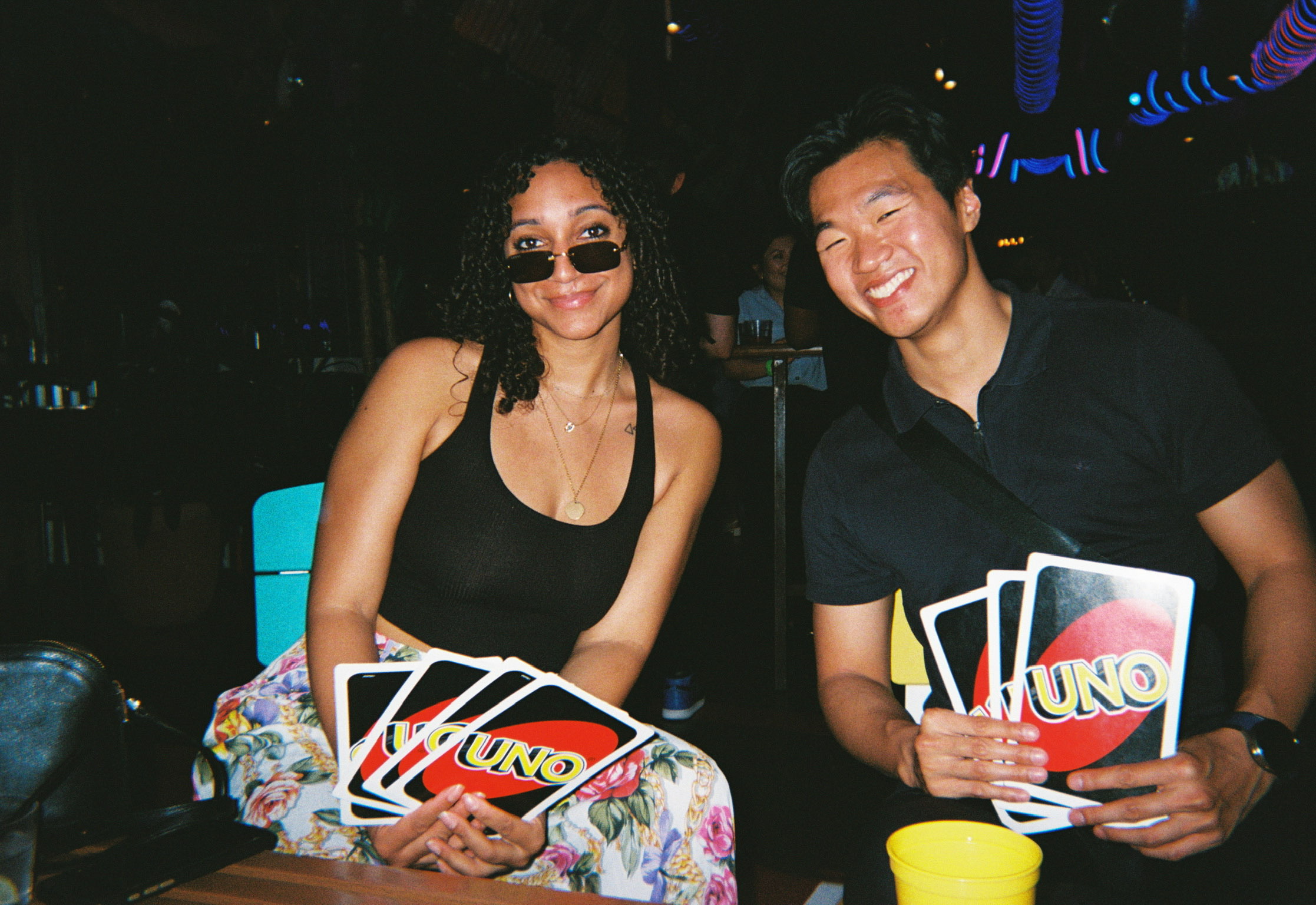
Shaping the future of friendship
TIMELINE
May - Dec 2024
TOOLS
Figma, Adobe Illustrator, v0, Claude
SCOPE
User Research
UX Design
OVERVIEW
Designing for interaction beyond the screen
At 3rd Space, I helped design a platform that encourages genuine friendship, shifting users away from endless scrolling to meaningful in-person experiences. This case study covers the latter half of my internship and excludes the graphic design portion, where I designed the brand's logo and visual identity.
THE PROBLEM
After graduating from college, many people relocate to new cities and lose the built-in social circles that campus life provides. Without that environment, forming new friendships can feel intimidating and challenging.
RESEARCH
Understanding what makes forming friendships in adulthood difficult
I focused on exploring how recent graduates approach making new friends, what barriers they encounter, and where digital tools might better support the process.
USER INTERVIEWS
To better understand real experiences, I interviewed individuals in their 20s-30s with varying levels of extroversion and social habits.
Interview objectives:
How do users meet new people after relocating or graduating?
What challenges do they face forming friendships?
Which platforms have they tried?
What types of friendships do they want?
Key findings:
Users are anxious about attending events alone
Most platforms don’t encourage follow-through to IRL meetups
People want recurring events to build trust over time
COMEPTITOR ANALYSIS
Existing platforms approach connection differently, what are the gaps?

Bumble BFF
+ PROS
Strong brand identity: people are already familiar with Bumble
Easy user onboarding: common "swipe" mechanics reduce friction
Profiles feature pictures and interests
- CONS
Feels like a dating app due to the swipe mechanic: for some users that undermines trust when friendship is the goal
Limited in facilitating in-person interactions beyond matching and chatting: many matches don't lead to meetups
Timeleft
+ PROS
Strong focus on in-person connection: people meet for curated dinners with strangers
Personality quiz and matching algorithm helps ensure some compatibility
Clear event schedule: consistent format with weekly dinners
- CONS
Introverted users might not prefer the social atmosphere of loud, after-dinner bars
Limited frequency: events are once per week

Meetup
+ PROS
Good for organizing interest-based groups: users often come in with shared interests
Many kinds of events such as social, hobby, or professional
Puts less pressure on users: people attend because of their interest in the topic, not necessarily to make a friend immediately
- CONS
Less structure around match compatibility: people can show up with very different interests
No features for icebreakers or guided connections: people have to initiate themselves
AFFINITY MAP
Users want repeated interactions that build trust and community
PLATFORM LIMITATIONS
CHALLENGES
COMMON DESIRES
OPPORTUNITES
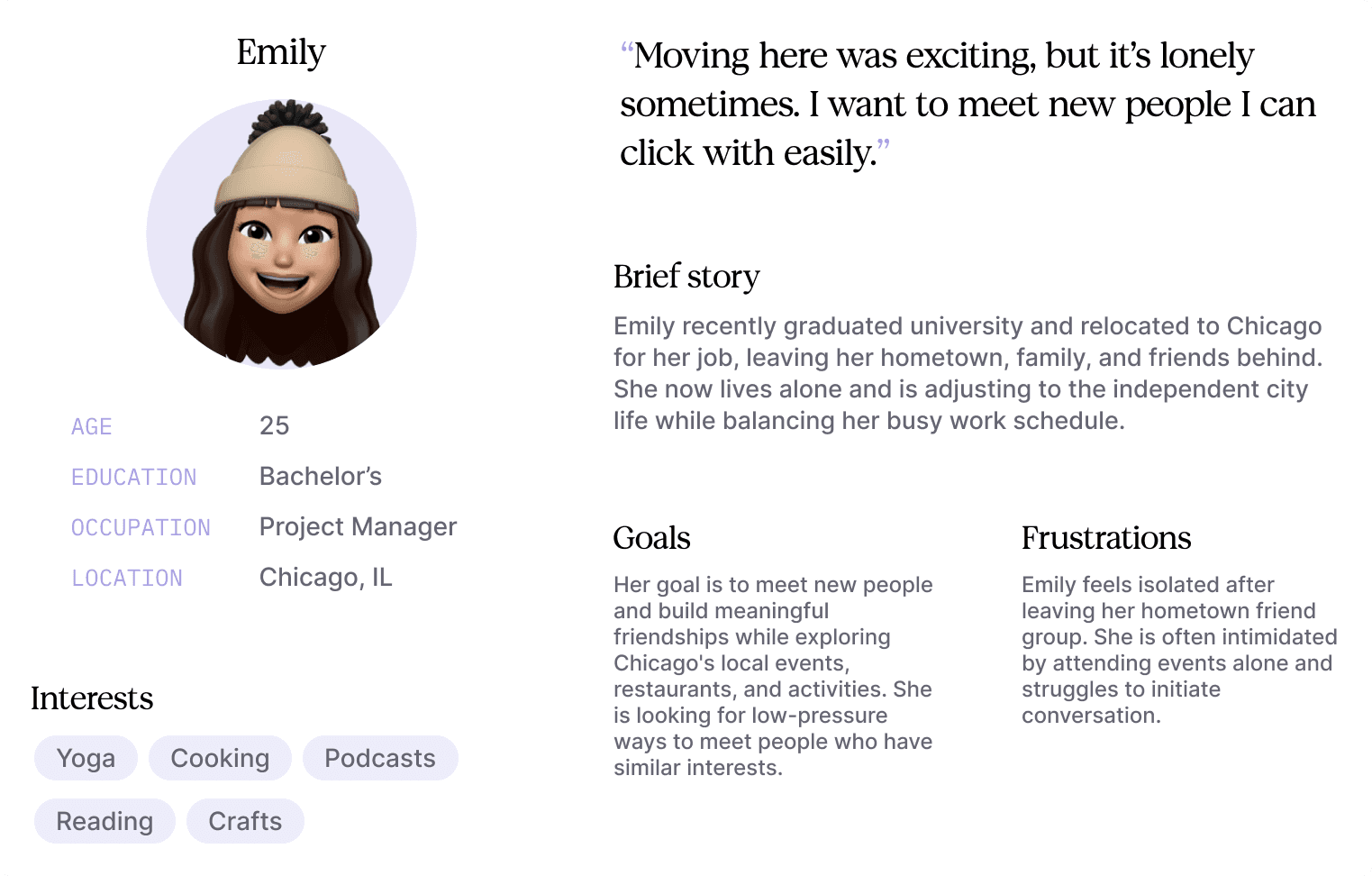
USER PERSONA
IDEATION
The solution
We focused on reducing social friction, encouraging users to move from online interactions to in-person meetups, and helping people feel more confident attending events alone. Primary goals:
Facilitate authentic relationships through guided events and activities
Reduce anxiety around attending events alone
Encourage recurring interactions that strengthen connections
Simplify event discovery, reminders, and communication
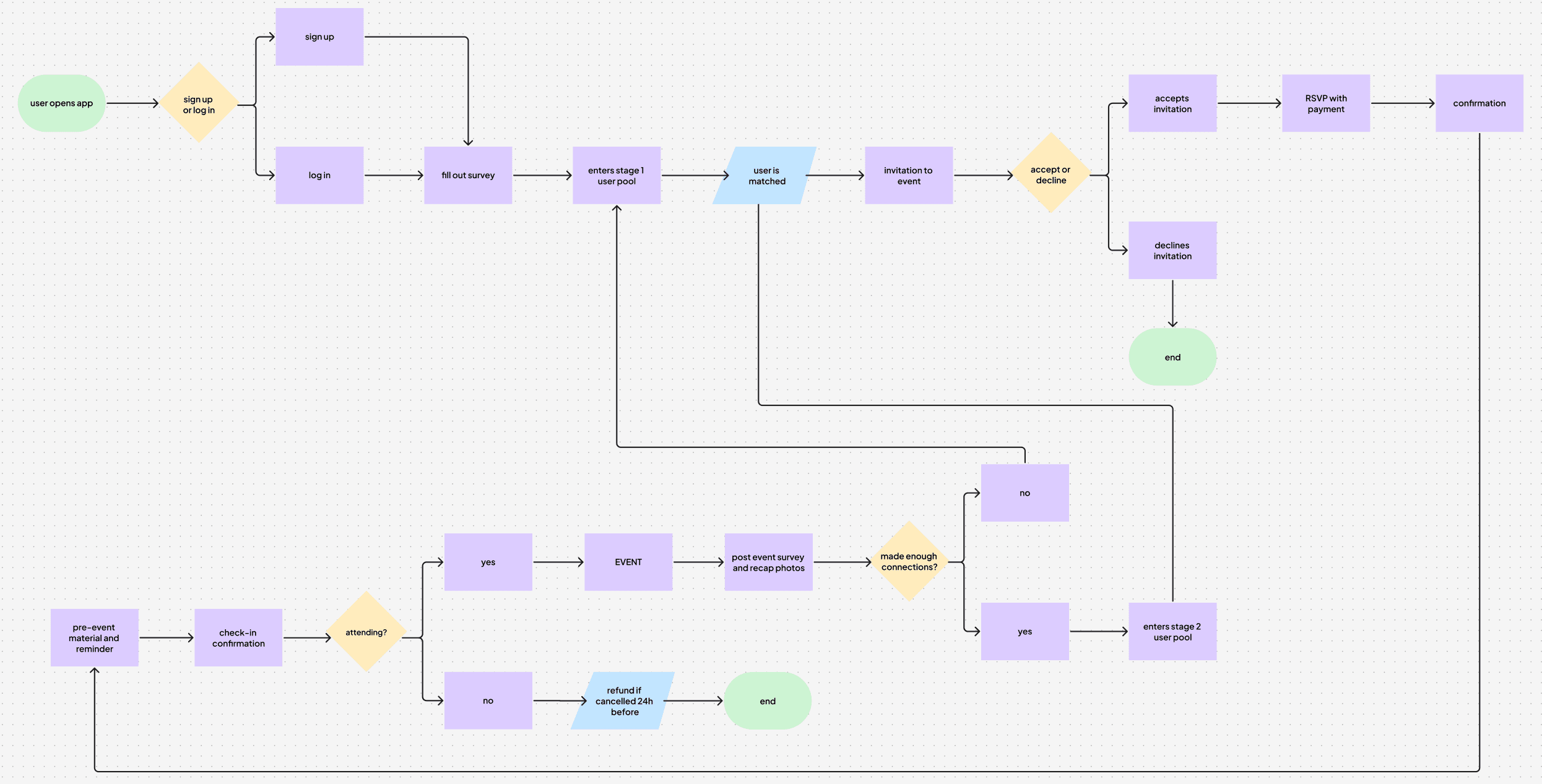
USER FLOW
AI USAGE
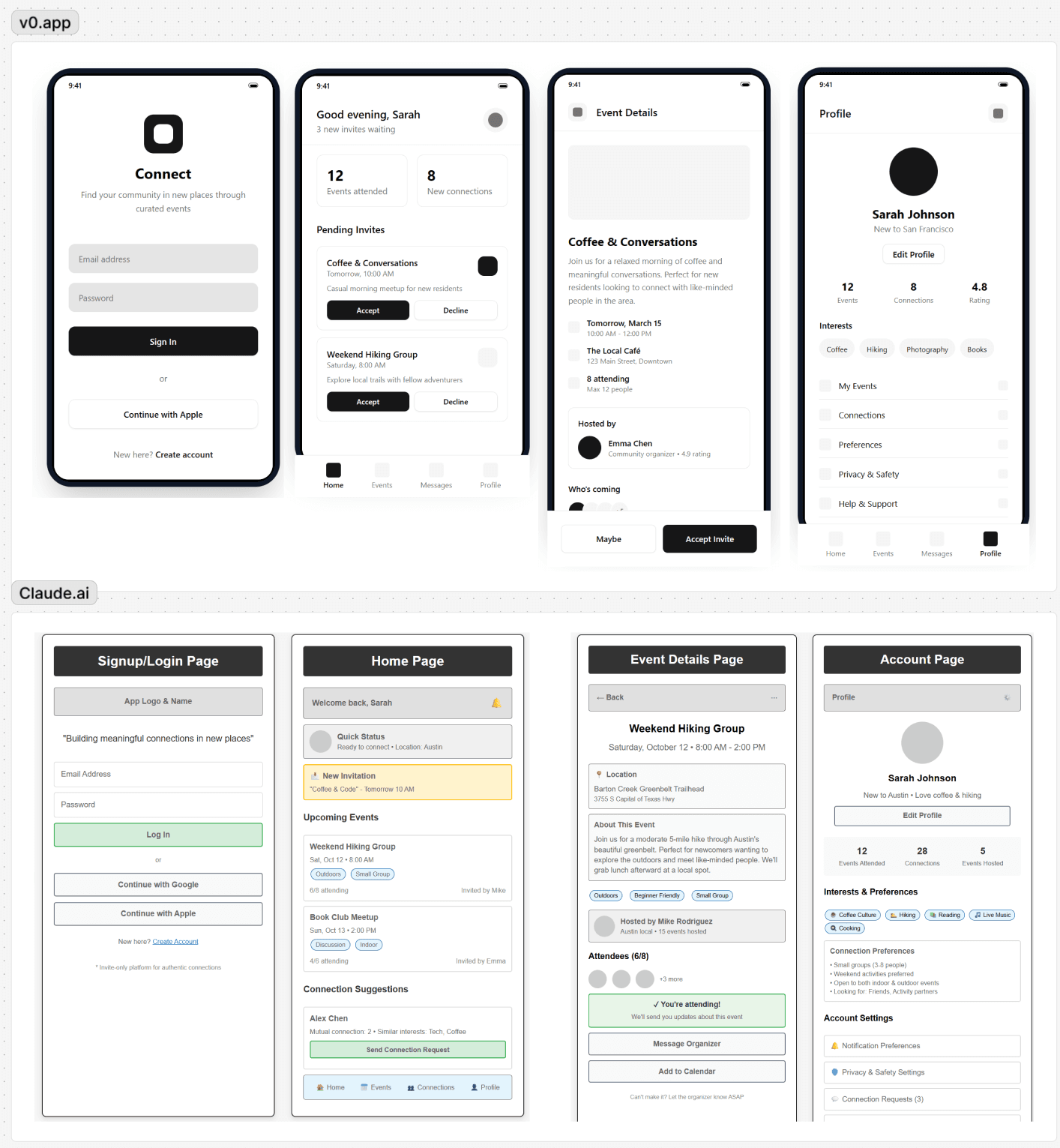
To explore different visual directions quickly, I used v0 and Claude to generate early interface concepts. These helped me spark ideas and refine my design approach before moving to more detailed execution.
LOW FIDELITY
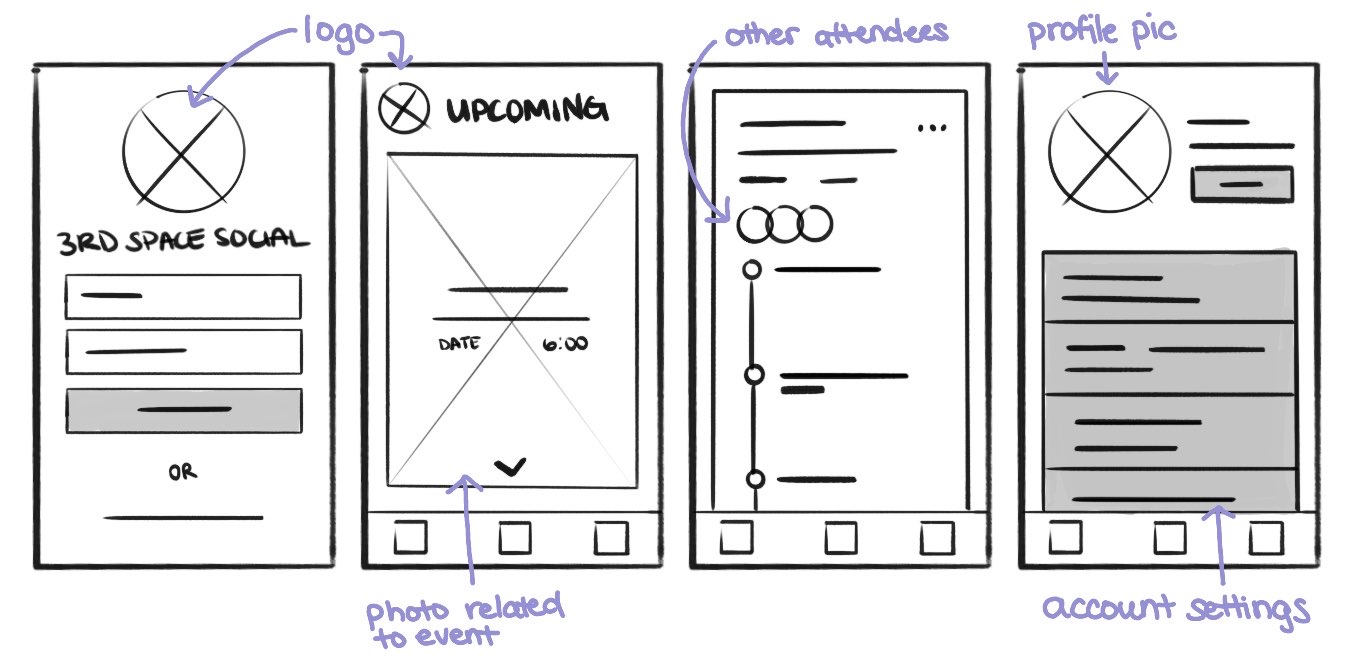
Using the AI concepts as inspiration, I sketched early layouts to explore key features and interaction patterns.
MID FIDELITY
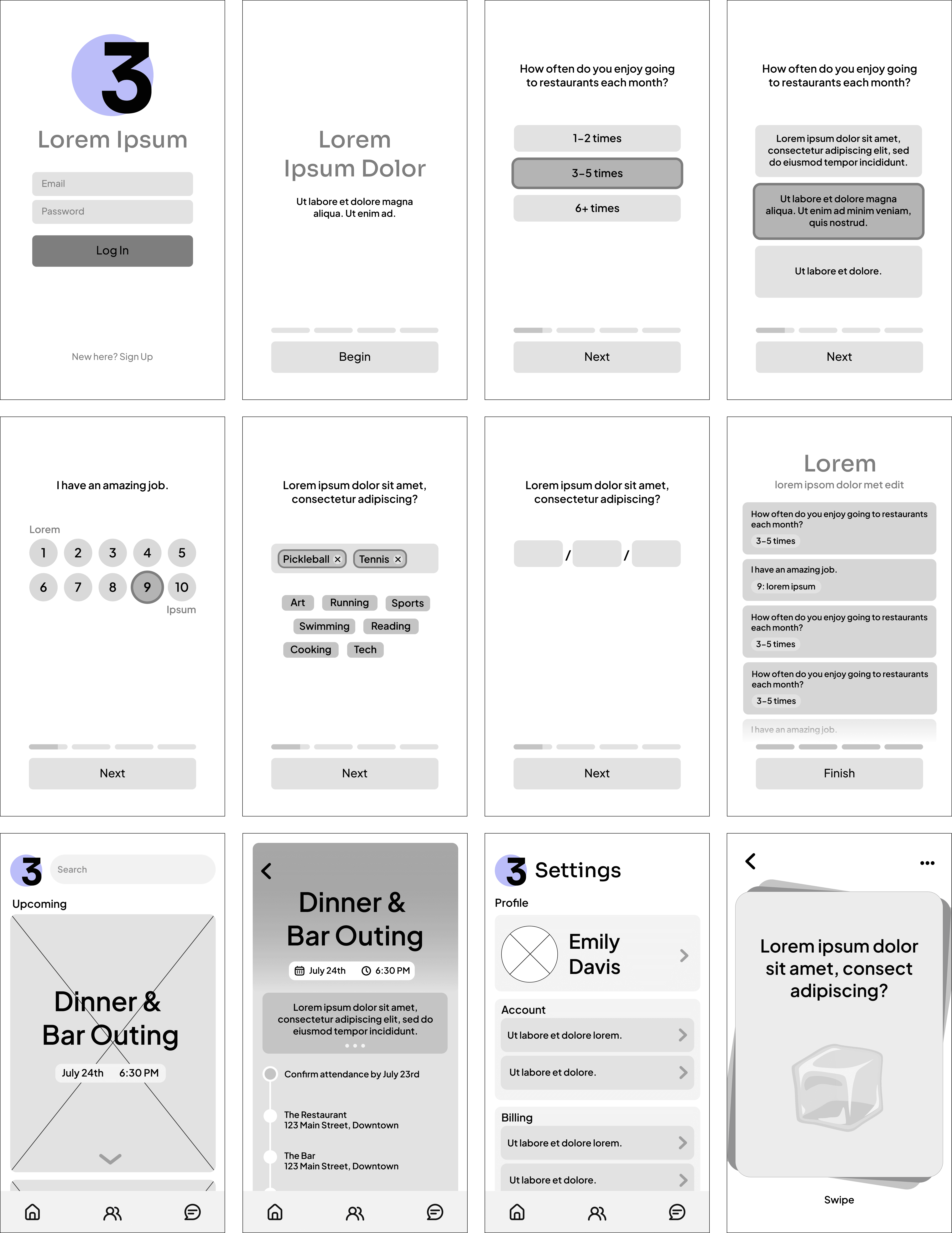
In Figma, I translated the sketches into mid-fidelity wireframes to refine layout, hierarchy, and the onboarding survey structure.
DESIGN DECISIONS
Reducing friction for users through subtle changes
ONBOARDING SURVEY
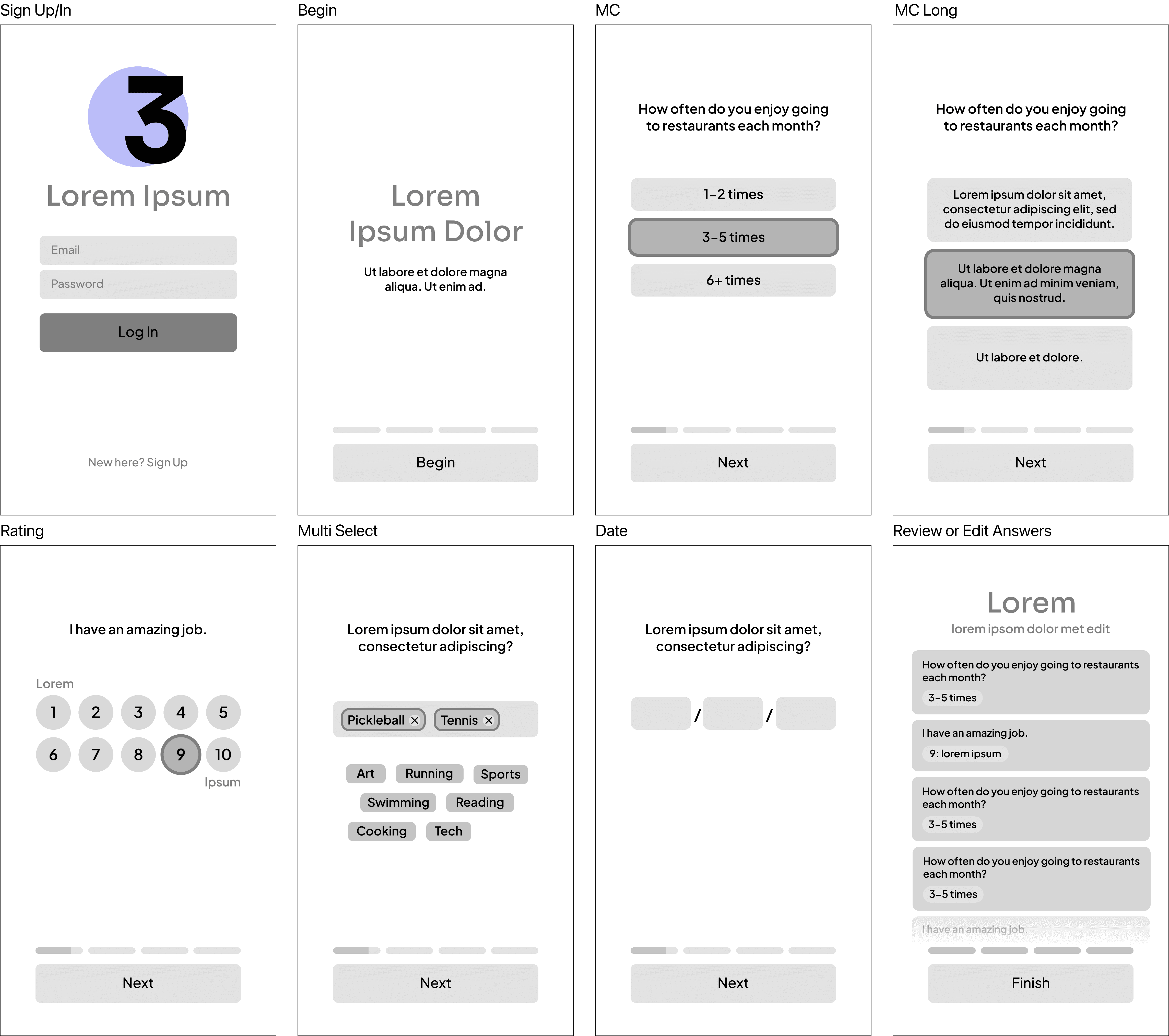
Surveys are often perceived as tedious tasks, with users rushing to complete them as quickly as possible. This onboarding survey is a crucial step that must be completed before users can be matched. To make our onboarding survey more engaging, I focused on the following design decisions:
Used large, playful UI elements to make the survey feel conversational rather than like a formal questionnaire
Incorporated a progress bar to show users how far along they are, reducing uncertainty and encouraging completion
Focused on clear, minimal text to keep the flow light and less formal
EVENTS/HOME
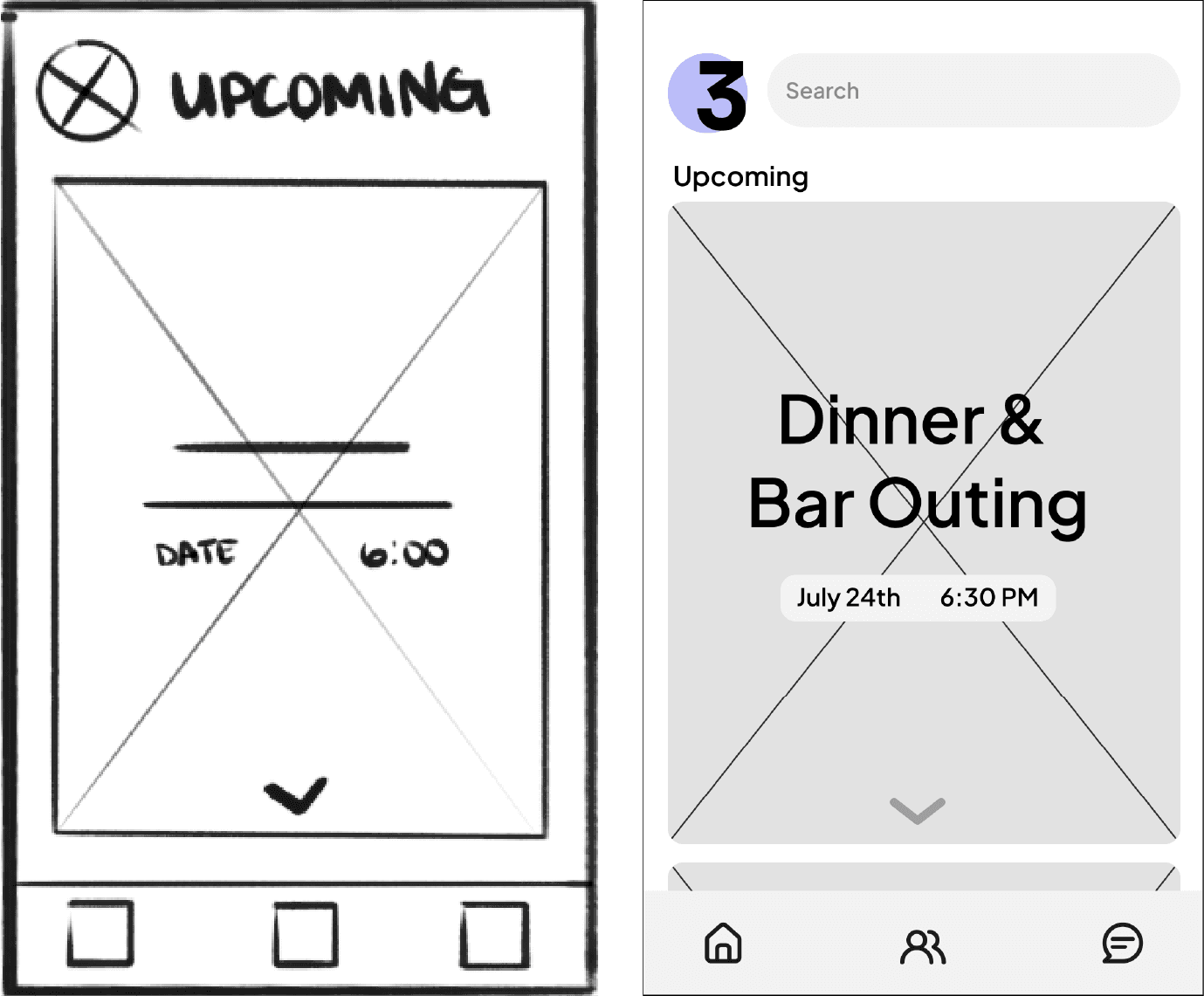
The home page was designed to highlight key information at a glance while remaining visually engaging and easy to navigate. Design decisions:
Placed upcoming events front and center to capture user attention immediately
A relevant image will be placed behind the event name
Displayed the date and time for quick scanning
Used a drop-down cue to suggest an expandable event details
EVENT DETAILS
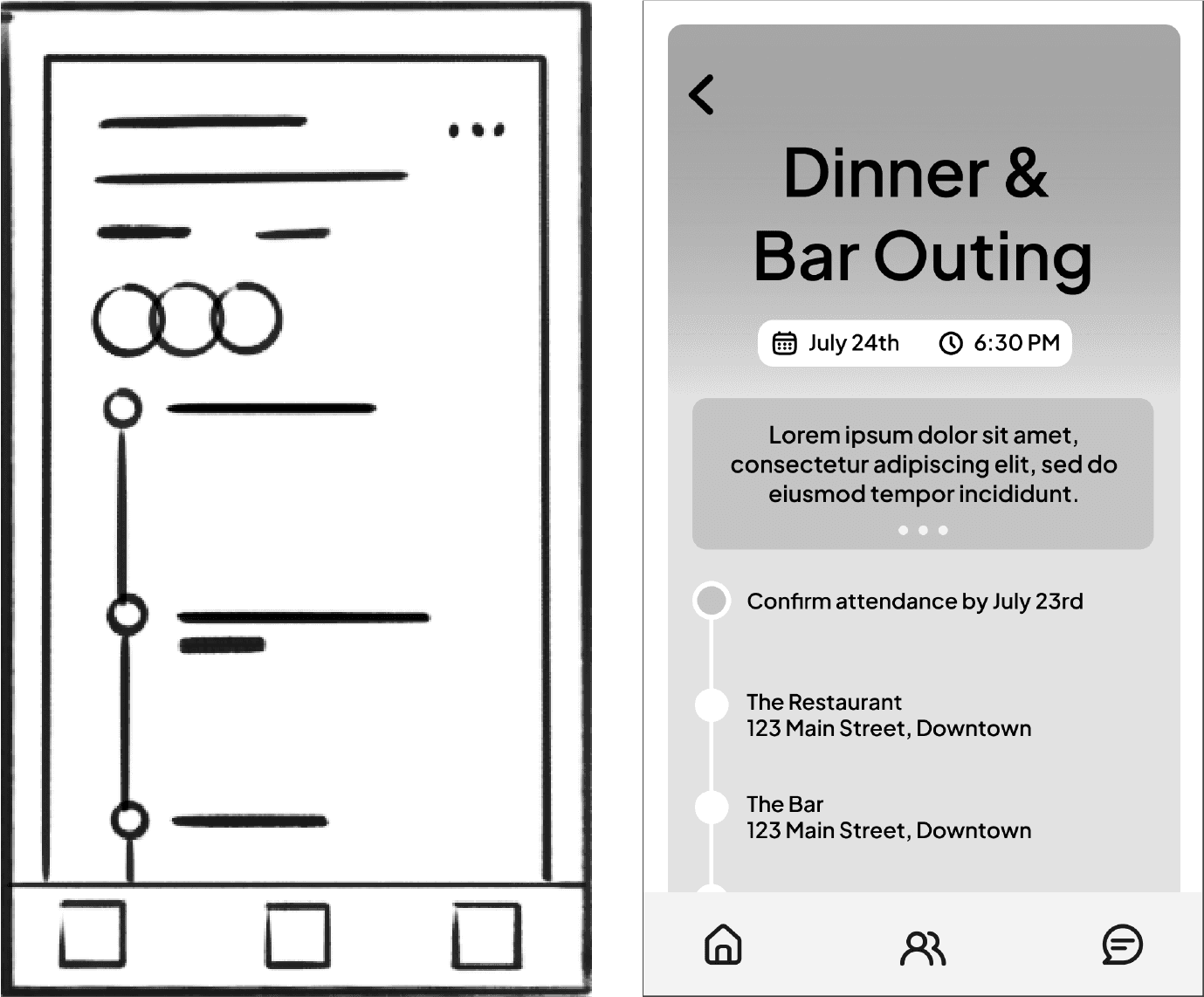
The event details page was adjusted to better balance clarity and hierarchy. Design decisions:
Increased size and enlarged the event name, date, and time
Added a swipeable container that reveals other information
Incorporated a timeline layout to show multi-stage events and changing locations (dinner at a restaurant followed by drinks at a bar) clearly
REFLECTION
Designing for social connection revealed how emotional barriers often shape user behavior
User research is essential to empathize with their pain points and motivations
AI tools like v0 and Claude can unlock inspirations and new directions to take
Iterating from low to mid-fidelity helped me fine-tune my design decisions
NEXT STEPS
My designs are an initial concept. Next steps include:
Developing high-fidelity wireframes to establish the visual identity
Conducting usability testing to validate flows
Exploring additional features (icebreakers, games, group chats, etc.) to reduce social anxiety
CONCLUSION
During my internship at 3rd Space Social, I discovered how much I enjoy creating products that spark vibrant communities. Stepping into a startup space where I had to wear multiple hats beyond UI/UX pushed me to adapt quickly and collaborate across multidisciplinary teams. What initially felt unfamiliar ultimately became a valuable opportunity to grow both as a designer and a communicator.